One small habit at a time.
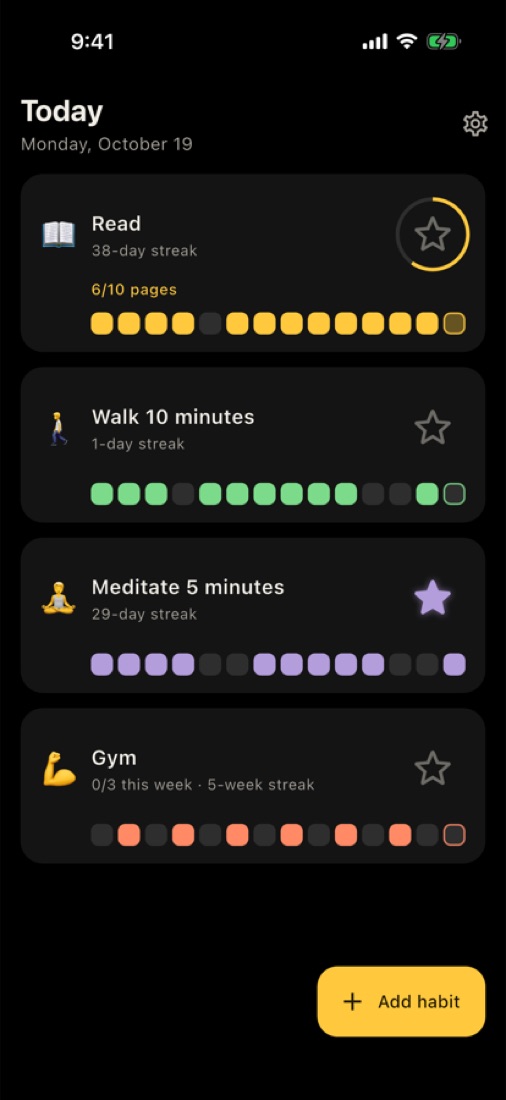
Tap a star each day. Miss a day? Fine, just don't miss twice. Watch each habit become automatic over about 66 days, the average a UCL study found.
Built on how habits really form
Most trackers punish you for one bad day. Habit research says that's the wrong lesson.
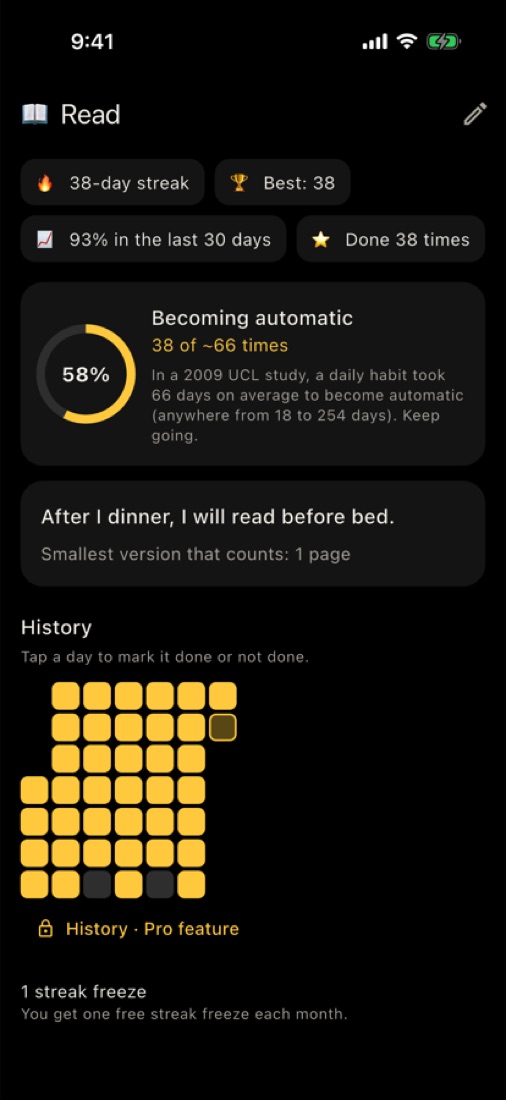
66 days to automatic
In Lally et al. (2009, UCL), daily habits took 66 days on average to become automatic, anywhere from 18 to 254. Each habit shows its own progress ring.
Never miss twice
The same study found a single missed day didn't hurt habit formation. One miss keeps your streak; two in a row end it. Monthly streak freezes add a safety net.
"After I…, I will…"
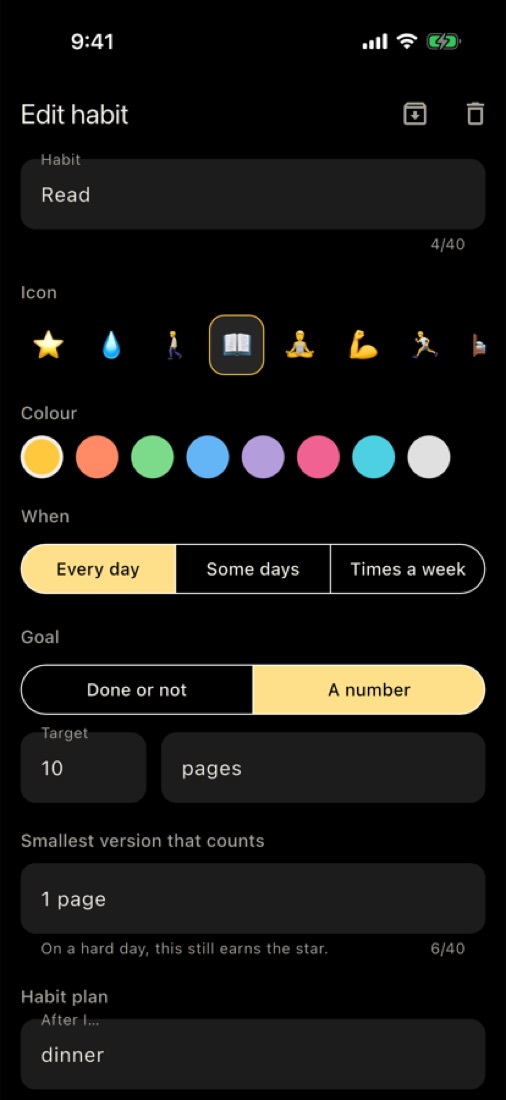
Tying a habit to something you already do (an implementation intention) makes you far more likely to follow through. Write one plan per habit.
66 days. Two single misses, streak still alive.
Simple enough for every day
Tap a star
One tap marks a habit done. Count habits, like 10 pages or 8 glasses, fill a ring instead.
Home-screen widget
Tick off habits right from your home screen, on iPhone and Android. Free for everyone.
Start tiny
Set the smallest version that still counts, so a hard day still earns its star.
Your schedule
Every day, chosen weekdays, or a few times a week. Night owls can end their day at 1–4 am.
Gentle reminders
Reminders show your plan, and skip habits you've already done today.
Private by design
No account, and your habits are never tracked or shared. They stay on your phone.
Calm, dark and focused
Good to know
Is it free?
Yes, with up to 3 habits, the widget, reminders, Friends and all the research features. Pro (monthly, or yearly with a 7-day free trial) removes ads and adds unlimited habits, full history and reports, more circles, per-weekday reminders and export.
Do I need an account?
No. Your habits are stored on your phone and included in your phone's normal backup.
Are there ads?
The free version shows one small banner and an optional video ad for a streak freeze. OneGoodHabit Pro removes all ads.
Which languages?
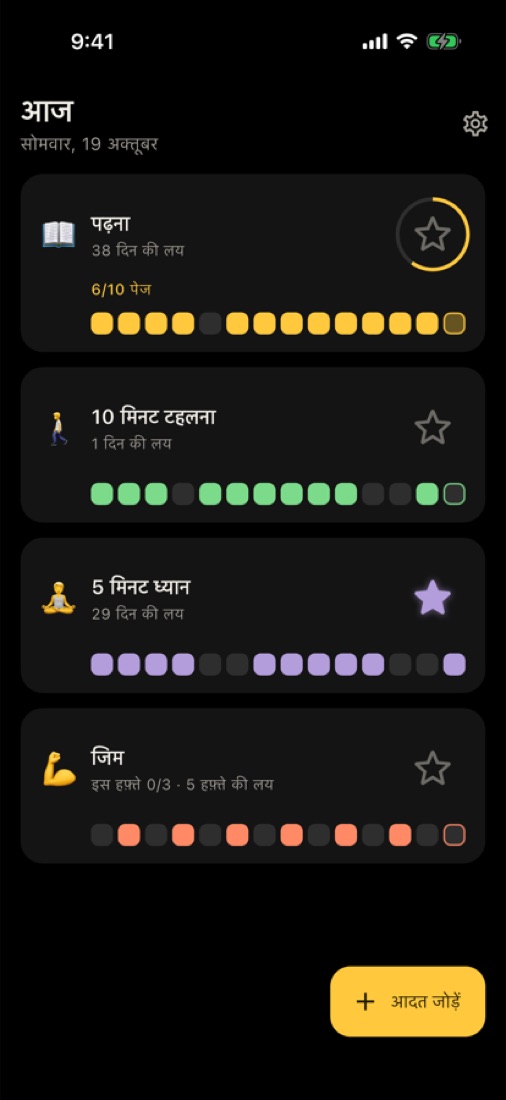
English, Spanish, French, German, Portuguese and Hindi.
Where does "66 days" come from?
Lally, van Jaarsveld, Potts and Wardle, "How are habits formed", European Journal of Social Psychology, 2009. It's an average; your habit may take less or more time.

Start with one small habit
Free, private, and kind on the days you slip.